Share James Wendell Brown's obituary with others.
Invite friends and family to read the obituary and add memories.
Stay updated
We'll notify you when service details or new memories are added.
You're now following this obituary
We'll email you when there are updates.
Select your format and elements to print

IN LOVING MEMORY OF James Wendell Brown
James Wendell
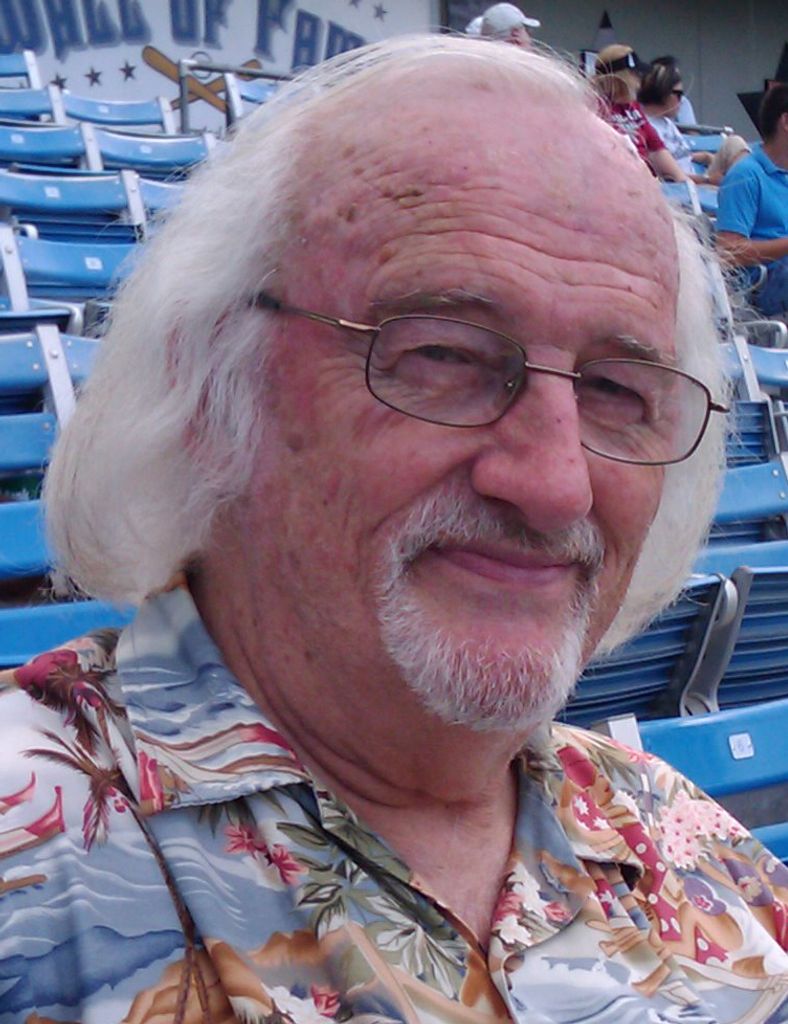
Brown
Sep 3, 1940 — Apr 28, 2019
James Wendell Brown's Obituary
James Wendell Brown
September 3, 1940- April 28, 2019
"Happy Trails to You"
James Wendell Brown, an educator, collector, and avid community member, died in the morning of Sunday, April 28th, 2019, at the age of 78. The cause of death was complications from non-melanoma skin cancer.
Brown was born in Harrison, Arkansas, September 3rd, 1940, the second child to Agnes Mae (née Duckworth) Brown and James Alexander Brown. He spent the first ten years of his life in Harrison, until his father, a railroader, relocated the family to Muskogee, Oklahoma. Brown graduated from Muskogee Central High School in 1958 and was able to afford a college education because his father received a scholarship from the Carnegie Foundation due to heroic acts he performed during the Midland Valley Railroad train wreck in Bokoshe, Oklahoma, February, 1958.
Brown majored in History at Northeastern State University in Tahlequah and graduated in 1962. Upon graduating, he was recruited by the public school district of Gallup, New Mexico to teach junior high school History. With a better pay scale and a chance to see the world outside of Oklahoma, Brown started his teaching career there in the spring of 1963.
On Summer break 1963, Jim reacquainted himself with Sara Lynn Crank, a Muskogee native who was finishing up her studies at Northeastern. They had a whirlwind courtship that resulted in their marriage on December 23rd, 1963. He was 23, and she was 20.
Sara followed Jim out to Gallup for her first teaching job, and they both taught in Gallup the next three years, which was formative to both of them in many ways. They would continue to visit New Mexico on family vacations for years to come, visiting friends in Gallup and also spending time at Ghost Ranch, in Abiquiu.
They returned to Oklahoma in 1967, with Brown taking a teaching job as a U.S. and Oklahoma history teacher at Woodrow Wilson Junior High School. He would continue to teach at Wilson until he moved to Will Rogers High School in the Fall of 1983. He would end his public school career there in 1997, having taught Oklahoma and U.S. History and helping start the Honors program there. During his tenure, he received numerous accolades, including Oklahoma Teacher of the Year by the Daughters of the American Revolution.
More important than awards were Brown's lasting impact on the thousands of students he taught over his 49 years as a teacher. Many of these stories will remain untold and held in the hearts of his students; still many exist. Like many teachers of his generation, he was influenced by Neil Postman's book "Teaching as a Subversive Activity," which held a philosophy of inquiry education, valuing critical thinking over rote memorization. In Brown's gentle hands, every student's opinion was valued, no matter left, right, or center. They were given the responsibility of forming and articulating their own opinions, and more importantly, to listen to the opinions of others in a critical and respectful way. He sometimes conducted classes in the round, which took the emphasis off the teacher as authority, and relished his role as facilitator. In this realm, he will be remembered as knowledgeable, fun, kind, and respectful of students.
Brown was passionate about history, and that passion encouraged his students to understand history as fluid and subject to many interpretations. History was not just a dusty relic of the past, but a living thing happening now in the form of current events. He was more than likely one of the first teachers in Tulsa to add to his curriculum the narrative of the Tulsa Race Massacre, then known as the Tulsa Race Riot. These lessons were not taught out of textbooks- that story wouldn't enter textbooks for years- instead they were handouts of research found at a time when not much scholarly work had been done on the subject.
In addition to being critical of past injustices in the Oklahoma timeline, Brown was just as likely to celebrate the amazing richness of the Oklahoma narrative. His "Okiecentric" attitude, which predated the current celebration of Oklahoma culture, drove him to collect memorabilia for four decades. One of his greatest wishes was for his personal collection to enter into a public museum, and that wish was granted when he oversaw the first items of his collection donated to the OKPOP Museum in Tulsa shortly before his death. He was also proud to be a generous contributor to the Boone County Heritage Museum in Harrison, Arkansas, and the Three Rivers Museum in Muskogee, Oklahoma.
It is the hope of Brown and his family that his lifelong passion becomes a lasting legacy.
Brown was a first wave "picker," then known as a "junker," when he started collecting "singing cowboy" memorabilia in 1972. This junking journey would continue for the rest of life, the thrill of the hunt leading him to find obscure and not-so-obscure diamonds in the rough. His interests were varied, his taste and intuition impeccable. In addition to singing cowboys and items of Oklahoma interest, he collected porcelain advertising signs, Bob Wills collectibles, state and national political campaign buttons and ephemera, and local baseball memorabilia.
Born into the Southern Baptist Church, Brown searched for a church experience from the time he left home, eventually finding the right fit at College Hill Presbyterian Church in 1972. He remained a part of the congregation until his death. He felt like he'd found his spiritual home there because of its inclusivity, intellectual rigor, and positive impact on the community. Most of all, he loved College Hill because of the people.
Another part of his journey was political activism. Upon his arrival in Tulsa, Brown began working campaigns for local, state, and national candidates, doing everything from canvassing, manning phone banks, stamp licking, and reporting precinct numbers for the Tulsa County Democratic Party. A couple of his many highlights were Chairing the Teacher's Political Action Committee in the mid-70s, and his nomination to be a delegate for Jimmy Carter at the Democratic National Convention of 1980.
After retirement, Brown continued his teaching career at Tulsa Community College for 20 years from 1997-2017, was a docent and public speaker for the Gilcrease Museum for the 20 years, and volunteered many years for Meals on Wheels of Metro Tulsa. He also did work for 2M2L (Too Much To Lose), a program designed to reduce underage drinking.
After Sara died in 1999, Brown enjoyed a second married life when he wed Ann Michelle Franklin in 2002. They enjoyed junking together, watching the Tulsa Drillers baseball team, and supporting the efforts of ZAR Horse Rescue, for which Ann is a volunteer organizer.
Brown is survived by his wife Ann Franklin, daughter Celia Suzann and son Timothy Neil, sister Patsy Buse, nephews Doug Buse, David Buse, and niece Debbie Buse, and many other family members and friends who all feel a great amount of gratitude for knowing a good man who did good things on earth while he was here with us. At the end, he wasn't afraid of dying, and he deeply enjoyed the journey of life.
A celebration of his life will be held at College Hill Presbyterian Church on Saturday, May 18th, 2pm.
In Lieu of flowers, Jim hoped that you could give to three entities that were near and dear to him:
• College Hill Presbyterian Church, 712 S. Columbia Avenue, Tulsa, Ok. 74104,
• Will Rogers High School Community Foundation, attn. Treasurer, P.O. Box 52845 Tulsa, OK 74152
• ZAR Horse Rescue http://zarhorserescue.weebly.com/
Legacy Touch Code: D9XDG2EM
To send flowers or plant a memorial tree in memory, please visit our flower store.
Funeral Services for James Wendell Brown
Celebration of Life

May
18
Saturday
College Hill Presbyterian Church
Starts at 2:00 pm
James Wendell Brown's Guestbook
Visits: 16
This site is protected by reCAPTCHA and the
Google Privacy Policy and Terms of Service apply.
Service map data © OpenStreetMap contributors